


The Serengeti, Ngorongoro, Tarangire, Lake Manyara, and the Crater Highlands — Tanzania’s northern circuit is the most celebrated and most rewarding safari route on the African continent.
Introduction
There is a route through northern Tanzania that has defined the global imagination of what an African safari is and should be. It begins in Arusha — the safari capital of East Africa — and moves through a succession of national parks and conservation areas of such extraordinary wildlife richness, ecological variety, and scenic grandeur that the travelers who complete it return home with a fundamental and permanent recalibration of what the natural world is capable of delivering.
This is the Northern Circuit Tanzania safari. Five destinations, each extraordinary in its own right, connected by the shared ecosystem of the greater Serengeti-Mara landscape and by the ancient geological drama of the East African Rift Valley. The Serengeti, with its endless golden plains and the greatest wildlife spectacle on Earth. The Ngorongoro Crater, the world’s largest intact volcanic caldera and its most concentrated Big Five sanctuary. Tarangire, with its thousand-year-old baobab trees and its extraordinary dry-season elephant herds. Lake Manyara, compressed into 330 square kilometers of remarkable habitat diversity including its famous tree-climbing lions and flamingo-fringed alkaline shore. And the broader Ngorongoro Conservation Area, where Maasai cattle and wild buffalo share grazing land across the volcanic highlands in a living model of traditional pastoral culture coexisting with wildlife conservation.
Together, these destinations form a safari circuit that is the gold standard of African wildlife travel — a journey that encompasses the Great Migration, the Big Five, rare black rhinoceros, endemic bird species, ancient human history at Olduvai Gorge, and the living Maasai culture of the Crater Highlands. It is the route by which Africa’s wildlife wilderness is most completely and most memorably revealed, and it has earned that reputation through decades of delivering experiences that exceed even the highest expectations of travelers who arrive with significant advance knowledge of what they are about to encounter.
This article is your definitive guide to planning and maximizing the Northern Circuit Tanzania safari — covering every destination, the optimal sequencing, the best timing, how to structure your itinerary, what distinguishes an exceptional circuit experience from a standard one, and everything you need to know to ensure your northern circuit journey is as extraordinary as the landscape it traverses.
The Northern Circuit: Five Destinations and Their Character
Arusha: The Gateway City
Every Northern Circuit Tanzania safari begins and ends in Arusha — a bustling city of approximately half a million people nestled at the foot of Mount Meru, Tanzania’s second-highest peak, in the shadow of Kilimanjaro’s distant white summit visible on clear mornings to the northeast. Arusha functions as the operational hub of the entire northern circuit: the city where safari operators, guides, and vehicle fleets are based; where international flights into Kilimanjaro International Airport connect to the circuit; and where travelers arrive, prepare, and depart.
Arusha itself rewards a brief visit beyond its logistical function. The Arusha Cultural Heritage Centre provides an excellent introduction to Tanzania’s diverse tribal cultures and artisan traditions. The Arusha National Park — a short drive from the city center — offers walking safaris on the slopes of Mount Meru, game drives through acacia woodland with giraffe, zebra, and buffalo, and the spectacular Ngurdoto Crater — a miniature volcanic caldera that provides a foretaste of the geological drama awaiting at Ngorongoro. An overnight in Arusha before and after the circuit allows for pre-departure briefings and post-safari reflection.
Lake Manyara National Park: The Forest and the Shore
The northern circuit’s most natural opening chapter, Lake Manyara sits 126 kilometers southwest of Arusha along the main circuit road, making it the first wildlife destination encountered by travelers leaving the city. The park’s compact geography — 330 square kilometers pressed between the Rift Valley escarpment and the western shore of the alkaline lake — delivers five distinct habitat zones in a single linear game drive: dense groundwater forest at the escarpment base, open floodplain, alkaline lake shore, seasonal wetland, and the dramatic escarpment wall rising above.
Lake Manyara’s defining wildlife encounters — the tree-climbing lions that drape themselves in the branches of large fig and mahogany trees along the park road, the flamingo congregations that transform the lake’s edge into a vivid band of deep rose pink when conditions are optimal, the groundwater forest primate community of olive baboon and blue monkey troops, and the southern hippo pools visited by elephant and buffalo families — create a wildlife introduction of remarkable variety that prepares the traveler well for the increasingly intense encounters that follow on the deeper circuit.
Most northern circuit itineraries allocate a half-day to one full day at Lake Manyara — sufficient for a thorough game drive covering the full park extent. One overnight stay adds the possibility of a night game drive within the park boundary, available exclusively through the &Beyond Lake Manyara Tree Lodge, which is the park’s only internal accommodation property.
Tarangire National Park: Baobabs and Elephant Herds
Approximately 100 kilometers south of Lake Manyara, Tarangire National Park represents the northern circuit’s most visually distinctive and most ecologically complex destination — a 2,850-square-kilometer park of ancient baobab woodland, seasonal floodplain, and the Tarangire River that serves as a dry-season magnet for one of Africa’s most spectacular wildlife aggregations.
During the dry season from June through October, the Tarangire River functions as the primary permanent water source for wildlife across an enormous surrounding ecosystem, drawing elephant herds of hundreds of individuals, buffalo in their thousands, zebra, wildebeest, and the full complement of northern Tanzania predators in concentrations that make this the finest single dry-season wildlife spectacle available on the circuit. The baobab woodland through which this concentration moves provides a landscape backdrop of haunting primordial grandeur — trees estimated at up to 3,000 years of age framing elephant herds and predator sightings in natural compositions of extraordinary visual power.
Tarangire is also Tanzania’s most important resident wild dog habitat, with several packs regularly encountered within the park and adjacent private concessions, and one of the continent’s premier birdwatching destinations with 550-plus confirmed species. One to two nights is the standard northern circuit allocation — sufficient to experience both the dry-season wildlife spectacle and the park’s distinctive baobab landscape aesthetic.
The Ngorongoro Conservation Area and Crater: The World’s Greatest Wildlife Sanctuary
The Ngorongoro Conservation Area encompasses 8,292 square kilometers of the Crater Highlands in northern Tanzania, but its centerpiece — the Ngorongoro Crater — is the feature that defines its global significance. Formed approximately three million years ago when a massive volcano collapsed inward upon itself, the crater is the world’s largest intact volcanic caldera: 260 square kilometers of enclosed ecosystem surrounded by walls rising 600 meters, supporting approximately 25,000 to 30,000 large animals within a geographical space that is entirely navigable within a single game-drive day.
The crater’s enclosed geography creates a wildlife sanctuary of near-perfect reliability — lion, leopard, elephant, Cape buffalo, and the rare black rhinoceros are all present and regularly encountered within the compact space, making a full crater game-drive day the most consistently productive Big Five encounter available anywhere on the African continent. The crater’s isolation has also produced distinctive wildlife adaptations — the dark-maned Ngorongoro lions, genetically distinct from surrounding populations, are among the most visually striking in Africa.
Beyond the crater floor, the broader Ngorongoro Conservation Area provides significant additional northern circuit value. Olduvai Gorge — the archaeological site where Louis and Mary Leakey discovered hominid fossils dating back 1.8 million years — is accessible from the main crater road and offers a profound historical dimension to the conservation area visit: the recognition that the same landscape where wildebeest and lion enact their ancient predator-prey drama today was the landscape in which our own species’ ancestors first developed the characteristics that define modern humanity.
One to two full crater game-drive days is the standard northern circuit allocation for Ngorongoro. Rim lodge accommodation, positioned at 2,300 meters with panoramic caldera views, provides a dramatically beautiful overnight experience unique among Tanzania’s safari accommodation settings.
The Serengeti National Park: The Circuit’s Magnificent Conclusion
The Serengeti is the northern circuit’s culminating destination — the ecosystem that anchors the route’s global reputation and delivers its most overwhelming wildlife experiences. This 14,763-square-kilometer UNESCO World Heritage Site is home to the Great Migration — the annual movement of over 1.5 million wildebeest, 700,000 zebras, and 500,000 Thomson’s gazelles in a continuous circuit through the ecosystem — and to year-round predator populations that rank among Africa’s densest and most reliably viewable.
The Serengeti’s different zones offer distinct wildlife characters that northern circuit operators exploit strategically based on seasonal migration positioning. The southern Serengeti and Ndutu area deliver the calving season’s extraordinary predator concentration from January through March. The western corridor’s Grumeti River hosts migration river crossings from June through July. The northern Serengeti’s Mara River delivers the migration’s most cinematic chapter — the iconic river crossings — from August through October. The central Seronera Valley provides year-round predator viewing of exceptional quality through its resident lion prides, habituated leopard in the sausage trees, and open-plains cheetah families.
The Serengeti requires a minimum of three nights for a meaningful northern circuit experience — three full days of game driving across the ecosystem’s different zones allow sufficient wildlife coverage for the circuit to conclude with the breadth and depth it deserves. Four to five nights allows the deeper exploration that migration-focused travelers require.
Optimal Northern Circuit Sequencing and Timing
The Recommended Direction of Travel
The great majority of experienced northern circuit operators recommend traveling from Arusha outward through Lake Manyara and Tarangire to Ngorongoro and then the Serengeti — returning to Arusha from the Serengeti by light aircraft or by road. This direction has both practical and experiential advantages: it moves from the circuit’s most compact and most accessible destination toward its most expansive and most dramatically varied, building the traveler’s wildlife experience progressively in intensity and scale. Arriving at the Serengeti as the final destination — the largest park, the most complex ecosystem, the route’s emotional and experiential peak — creates a natural narrative arc that rewards the circuit traveler with its most overwhelming encounters at the point of maximum openness and readiness.
Seasonal Timing for the Northern Circuit
The northern circuit delivers outstanding wildlife experiences year-round, but the character of those experiences varies significantly with the seasons:
June through October (Dry Season): The circuit’s most visited and most consistently productive period for game viewing. Vegetation is sparse, wildlife is concentrated near permanent water sources, and the Serengeti’s Mara River crossings in August through October create the migration’s most iconic spectacle. Tarangire’s elephant concentrations peak. The Ngorongoro Crater’s predator activity is at its most intense. Accommodation rates are at their highest and advance booking is essential.
January and February (Short Dry Season): An outstanding alternative window that combines Zanzibar’s finest beach weather with the Serengeti’s calving season — the most emotionally powerful and predator-rich phase of the Great Migration. Visitor numbers are lower than peak dry season and accommodation rates are more moderate. This window is particularly recommended for travelers combining the northern circuit with a Zanzibar beach extension.
November and December (Short Rains): The northern circuit turns a vivid, lush green as the short rains arrive. Visitor numbers drop substantially, accommodation rates decrease significantly, and the landscape takes on a photographic beauty of rich color and atmosphere that the dry season cannot replicate. Game viewing remains excellent — the reduced vegetation density of the dry season is absent, but wildlife density and activity levels remain high.
March through May (Long Rains): The long rains bring the most challenging conditions on the northern circuit, with some roads becoming difficult and afternoon downpours curtailing game drives. Accommodation rates are at annual lows and exclusivity is at its peak — travelers who visit during this period frequently report having entire parks essentially to themselves. Suitable for experienced safari travelers comfortable with weather uncertainty.
Structuring Your Northern Circuit Itinerary
7-Night Compact Northern Circuit
Day 1: Arusha arrival and overnight. Day 2: Lake Manyara — full day game drive, overnight at park boundary lodge. Day 3: Transfer to Tarangire — full day game drive, overnight at camp. Day 4: Ngorongoro — transfer to crater rim, afternoon rim walk, overnight rim lodge. Day 5: Full crater game drive — Big Five immersion day. Days 6–7: Serengeti — two full game-drive days. Fly out via Kilimanjaro.
10-Night Comprehensive Northern Circuit
Day 1–2: Arusha and Arusha National Park orientation. Day 3: Lake Manyara — full day, overnight in-park or boundary lodge. Days 4–5: Tarangire — two nights, elephant concentration focus, walking safari option. Day 6: Transfer to Ngorongoro highlands, afternoon Olduvai Gorge visit. Days 7–8: Ngorongoro — two full crater game-drive days, rim lodge accommodation. Days 9–10: Serengeti — central and migration zone positioning. Day 10: Fly from Serengeti to Kilimanjaro or Zanzibar.
12-Night Northern Circuit Plus Zanzibar Beach
Days 1–2: Zanzibar beach arrival and Stone Town. Days 3–4: Lake Manyara and Tarangire. Days 5–6: Ngorongoro Crater — two full crater days. Days 7–10: Serengeti — four migration-focused game-drive days. Days 11–12: Return to Zanzibar for the final Indian Ocean beach chapter.
What Distinguishes an Exceptional Northern Circuit Experience
Guide Quality
The single most important determinant of northern circuit safari quality is the depth of ecological knowledge and personal quality of the guide. A guide who knows the Serengeti’s resident cheetah families by individual identification, who can read migration positioning from the behavior of vultures circling kilometers away, who understands the social dynamics of the Ngorongoro crater lion prides across generations, and who communicates all of this with genuine passion and accessible expertise transforms a series of impressive wildlife sightings into a coherent, deeply understood encounter with a living ecosystem. Always verify guide qualifications, specific park experience, and language proficiency when evaluating northern circuit operators.
Private Vehicles
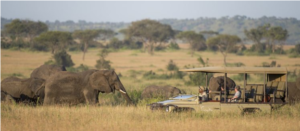
Northern circuit game drives on private vehicles — versus shared vehicles with other guests — provide the positioning control, extended sighting time, and flexibility of pace that make the difference between photographically and experientially excellent encounters and merely good ones. For the northern circuit’s most productive sightings — Ngorongoro crater encounters, Serengeti predator sequences, Tarangire elephant herds — private vehicle access is the standard that serious wildlife travelers should not compromise.
Key Takeaways
- The Northern Circuit Tanzania safari — encompassing Arusha, Lake Manyara, Tarangire, Ngorongoro, and the Serengeti — is the most celebrated and most comprehensive safari route in Africa.
- Arusha serves as the circuit’s gateway city, its operational hub, and the base for guide teams, vehicle fleets, and specialist safari operators.
- Lake Manyara provides the circuit’s most compact habitat diversity, featuring tree-climbing lions, flamingo lake shores, and groundwater forest primates in a single linear game drive.
- Tarangire delivers the circuit’s most visually distinctive landscape — ancient baobab woodland — alongside Africa’s most spectacular dry-season elephant concentrations and Tanzania’s most reliable wild dog habitat.
- Ngorongoro Crater is the world’s greatest single-day Big Five destination — near-certain lion, elephant, buffalo, leopard, and black rhino encounters within 260 square kilometers.
- The Serengeti anchors the circuit with the Great Migration, year-round predator populations, and wildlife experiences of a scale and drama available nowhere else on Earth.
- Olduvai Gorge within the Ngorongoro Conservation Area adds a profound archaeological and human evolutionary dimension to the circuit’s wildlife richness — the cradle of humankind within the world’s greatest wildlife landscape.
- Travel direction — Arusha to Manyara to Tarangire to Ngorongoro to Serengeti — builds the circuit’s wildlife intensity progressively toward its most spectacular conclusion.
- June through October and January through February are the two optimal northern circuit windows for combining peak wildlife activity with the most dramatic migration phases.
- Guide quality and private vehicles are the two most critical determinants of northern circuit experience quality — more important than accommodation tier, more important than destination choice, and worth prioritizing above all other planning considerations.
Questions & Answers
Q: How many days do I need for the complete Northern Circuit Tanzania safari? A meaningful northern circuit experience requires a minimum of seven nights — sufficient for one full day at Lake Manyara, one to two days at Tarangire, two days at Ngorongoro, and two full days in the Serengeti. This allocation covers the circuit’s essential wildlife encounters but leaves limited time for depth at any individual destination. Ten nights represents the sweet spot for most travelers — adding days to both Tarangire and the Serengeti that dramatically deepen the wildlife experience at these largest and most complex parks. Twelve to fourteen nights allows for thorough Serengeti exploration across different ecosystem zones, a dedicated Olduvai Gorge visit, and time for specific interests such as birdwatching, photography, or walking safaris in private concession areas. Travelers with limited total time are better advised to reduce the number of parks visited rather than compress the entire circuit into five or six nights — two parks experienced deeply are substantially more rewarding than five parks visited superficially.
Q: Is it better to drive or fly between northern circuit destinations? Both approaches have distinct advantages and the optimal choice depends on budget, time availability, and experiential priorities. Flying between parks by light aircraft — the “fly-in” circuit format — eliminates road transfer time entirely, replacing three to five-hour drives with forty-minute to ninety-minute flights that provide spectacular aerial perspectives on the Tanzanian landscape and deliver guests directly to bush airstrips adjacent to their camps in time for afternoon game drives on arrival days. The premium over road-based itineraries is significant — typically USD 300 to USD 600 per person per flight sector — but purchases meaningful additional time in the field. Road transfers, while slower, allow travelers to experience the landscape transitions between parks, encounter roadside wildlife and Maasai community life, and access a wider range of accommodation properties not served by bush airstrips. Most experienced operators recommend a hybrid approach for the comprehensive northern circuit: road transfers between Arusha, Manyara, and Tarangire (shorter distances), and light aircraft for the Tarangire-to-Ngorongoro and Ngorongoro-to-Serengeti connections where the time savings are most valuable.
Q: What is the Great Migration and how does it affect northern circuit timing decisions? The Great Migration is the annual movement of over 1.5 million wildebeest, 700,000 zebras, and 500,000 Thomson’s gazelles in a continuous clockwise circuit through the Serengeti-Mara ecosystem, driven by rainfall patterns and the availability of fresh grass. The migration is a year-round phenomenon rather than a single event, but its different phases offer dramatically different wildlife spectacles that should drive Serengeti positioning decisions for northern circuit travelers. Calving season in the southern Serengeti and Ndutu area (January through March) produces extraordinary predator concentration around the wildebeest birthing grounds — the most emotionally intense phase. The Grumeti River crossings of the western corridor (June through July) provide dramatic predator-prey encounters with lower visitor density than the more publicized northern crossings. The Mara River crossings in the northern Serengeti (August through October) are the migration’s most cinematic and most widely photographed phase — the iconic scenes of wildebeest and zebra plunging into crocodile-filled water that define the global visual vocabulary of the migration. Understanding this calendar and matching Serengeti positioning to migration phase is the most important specific planning decision for northern circuit travelers.
Q: Can the Northern Circuit Tanzania safari be done on a budget? The northern circuit can be completed at a range of budget levels, and the wildlife experiences available at each level — while different in accommodation comfort and logistical convenience — are not as dramatically different in quality as cost differentials might suggest. Mid-range group safari tours using shared vehicles, mid-range tented camps, and road transfers between destinations achieve the full northern circuit wildlife experience — all five parks, all major wildlife encounters, qualified guides — at total costs of approximately USD 3,000 to USD 5,000 per person for a seven to eight-night itinerary excluding international flights. The primary quality difference between budget and luxury tier is accommodation amenity and the privacy of the game-drive vehicle — the wildlife itself and the guide’s ecological knowledge are not exclusive to luxury pricing. Budget travelers should prioritize operator reputation and guide quality over accommodation standard, as the guide’s expertise determines encounter quality far more than the tent’s thread count.
Q: What is Olduvai Gorge and why is it significant to the northern circuit experience? Olduvai Gorge is an archaeological site of global scientific significance located within the Ngorongoro Conservation Area, accessible from the main road between the Ngorongoro Crater and the Serengeti. The gorge is the site where paleontologists Louis and Mary Leakey, working from the 1930s through the 1960s, discovered a succession of hominid fossils representing multiple ancestral human species — including Homo habilis, Australopithecus boisei, and Homo erectus — spanning a continuous record of human evolution dating back 1.8 million years. Olduvai Gorge is sometimes called “the Cradle of Mankind” for its contribution to the understanding of human evolutionary history, and its site museum provides a remarkably accessible and scientifically rigorous introduction to the paleoanthropological record preserved within its exposed geological layers. A visit to Olduvai Gorge adds a profound human evolutionary dimension to the northern circuit that contextualizes the wildlife encounters in a uniquely powerful way — the recognition that the landscape where wildebeest and lion enact their ancient predator-prey drama today was the landscape in which our own species’ ancestors developed the cognitive and physical characteristics that define modern humanity.
Q: How should I choose a northern circuit safari operator from the large number available? TATO accreditation is the essential baseline — all legitimate Tanzania safari operators should be members of the Tanzania Association of Tour Operators. Beyond accreditation, the most reliable indicators of operator quality are specific guide credentials and experience, vehicle maintenance standards and age, the depth and specificity of the operator’s ecological knowledge demonstrated during the pre-booking consultation, verified client reviews from travelers on comparable itineraries, and the operator’s transparency about what is included versus excluded in quoted prices. Ask prospective operators to describe the specific qualities and experience of the guide who would lead your circuit, to explain the current migration positioning relative to your travel dates, and to describe the specific accommodation properties they recommend with the detail of someone who has recently visited them personally. The depth and accuracy of their answers will tell you immediately whether you are speaking to an expert or a booking agent. An expert operator’s pre-booking consultation is itself a significant indicator of the quality of knowledge and attention you will receive throughout the circuit.

Conclusion
The Northern Circuit Tanzania safari is not merely a travel itinerary. It is a journey through the most concentrated expression of the natural world’s magnificence available anywhere on Earth — a route that moves, in the space of one to two weeks, through landscapes and wildlife encounters that have defined the global imagination of what wild Africa is for over a century of safari travel.
Lake Manyara introduces the circuit with surprising, compact richness. Tarangire delivers its extraordinary elephants and ancient baobab grandeur with the quiet confidence of a destination that knows its value without needing to announce it. Ngorongoro confronts the traveler with geological and biological time — a volcanic bowl formed three million years ago, still enclosed, still teeming, still producing on its ancient crater floor the same wildlife dramas that have played out within its walls since long before our species arrived to observe them. And the Serengeti — vast, golden, alive with the continuous movement of the world’s greatest animal congregation — concludes the circuit with wildlife experiences of a scale and intensity that make the traveler understand, with sudden and complete clarity, why this landscape has held the human imagination so completely for so long.
These parks are extraordinary individually. Together, connected by the shared ecosystem and the geological narrative of the Rift Valley, they are something greater — a coherent portrait of wild Africa in its fullest and most diverse expression. No other safari route on the continent delivers this completeness. No other circuit covers so much of what wild Africa actually is within a single, navigable journey.
Travel it with the best guide you can find. Give it the time it deserves. Move through it with patience and open eyes. And let the northern circuit tanzania safari do what it has done for every traveler fortunate enough to complete it: show you, with generosity and without qualification, the full, overwhelming, permanently transformative magnificence of the natural world.